
Navigating the RAM Module Shortage: Causes, Effects, and Solutions
Dealing with DDR4/DDR5 RAM shortage
TIPS & TRICKS
12/13/20253 min read
Navigating the RAM Module Shortage: Causes, Effects, and Solutions
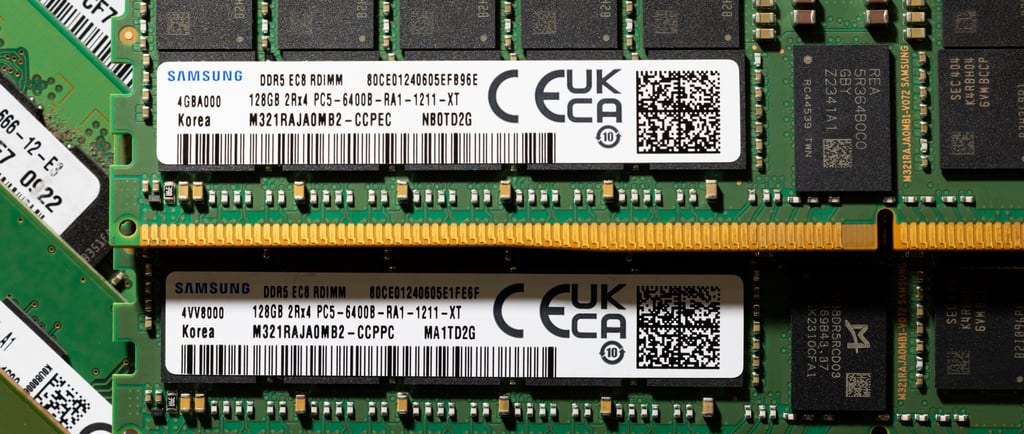
The global shortage of RAM modules has become a major challenge for businesses, system integrators, and consumers alike. What began as a temporary supply chain disruption has evolved into a sustained imbalance between supply and demand. A key driver of this situation is the rapid expansion of artificial intelligence infrastructure, which has fundamentally changed how memory is produced, allocated, and consumed.
What Is Driving the RAM Shortage?
AI Infrastructure Is Absorbing Massive Amounts of Memory
The rise of AI workloads has dramatically increased demand for server-grade memory. Training and running large AI models requires vast amounts of RAM per system, often in tightly packed configurations. Hyperscale cloud providers and AI companies are purchasing memory in unprecedented volumes, locking in long-term supply contracts and effectively stockpiling RAM modules. This behavior significantly reduces availability for traditional enterprise, industrial, and consumer markets.
Manufacturing Capacity Is Being Redirected
Major memory manufacturers are prioritizing high-margin products designed for AI and data center use. Production lines are increasingly focused on advanced DDR5 and high-bandwidth memory, often at the expense of legacy DDR4 and standard consumer modules. Since fabrication capacity is finite, this shift directly limits the output of commonly used RAM types that many existing systems still rely on.
Reduced Production of Legacy Memory
DDR4 is far from obsolete, yet many manufacturers are scaling back or discontinuing its production. At the same time, DDR5 adoption is not yet universal, especially in industrial, embedded, and cost-sensitive environments. This mismatch between real-world demand and manufacturing priorities is creating persistent shortages and price pressure.
Supply Chain and Geopolitical Constraints
Memory production depends on a complex global supply chain. Ongoing geopolitical tensions, export restrictions, and regional manufacturing concentration continue to introduce risk and uncertainty. These factors make it difficult to quickly scale production or rebalance supply when demand spikes unexpectedly.
The Impact on the Market
The consequences of the RAM shortage are being felt across multiple sectors:
Prices for DDR4 and DDR5 modules have increased sharply and remain volatile
Lead times for server and enterprise memory have extended significantly
System builders face higher costs and reduced flexibility in component selection
End users experience increased prices for PCs, servers, and network equipment
Smaller buyers are particularly affected, as they lack the purchasing power to compete with large AI-focused customers that secure priority access to supply.
Practical Ways to Mitigate the Shortage
Plan Memory Purchases in Advance
Organizations should avoid just-in-time purchasing strategies for RAM. Forecasting needs early and securing inventory ahead of deployments can reduce exposure to sudden shortages or price spikes.
Extend the Life of Existing Hardware
Upgrading memory in current systems can be more cost-effective than replacing entire platforms. In many cases, maximizing supported RAM capacity delivers meaningful performance improvements without the cost of new hardware.
Consider Refurbished or Reused RAM
RAM does not degrade significantly over time when handled properly. Refurbished or reclaimed modules can provide reliable performance at a lower cost and with better availability than new stock.
Use Virtualization and Cloud Resources Strategically
For workloads that do not require on-premise hardware, cloud infrastructure can help offset physical memory constraints. This approach can reduce immediate dependence on scarce RAM modules.
Looking Ahead
The RAM shortage is not expected to resolve quickly. While new fabrication capacity is planned, memory manufacturing takes years to scale. As long as AI development continues at its current pace and hyperscalers continue stockpiling memory, pressure on the broader market will remain.
Emerging technologies such as memory pooling and CXL-based expansion may help improve efficiency in the long term, but they are not yet a universal solution.
Conclusion
The current RAM module shortage is not simply a supply chain issue. It is a structural shift driven largely by AI-driven demand, aggressive stockpiling by large buyers, and a reallocation of manufacturing capacity toward specialized memory products. Understanding these dynamics is essential for making informed purchasing and infrastructure decisions in an increasingly constrained market.
More information
Subscribe to OUR FREE newsletter
sales@rakargroup.com
+372 5680 0295
© 2025. Rakar Group OÜ - All rights reserved.
Rakar Group OÜ
Reg. code 17392853
Kadaka tee 44a
12915 Tallinn